
 English
 Portuguese
 Spanish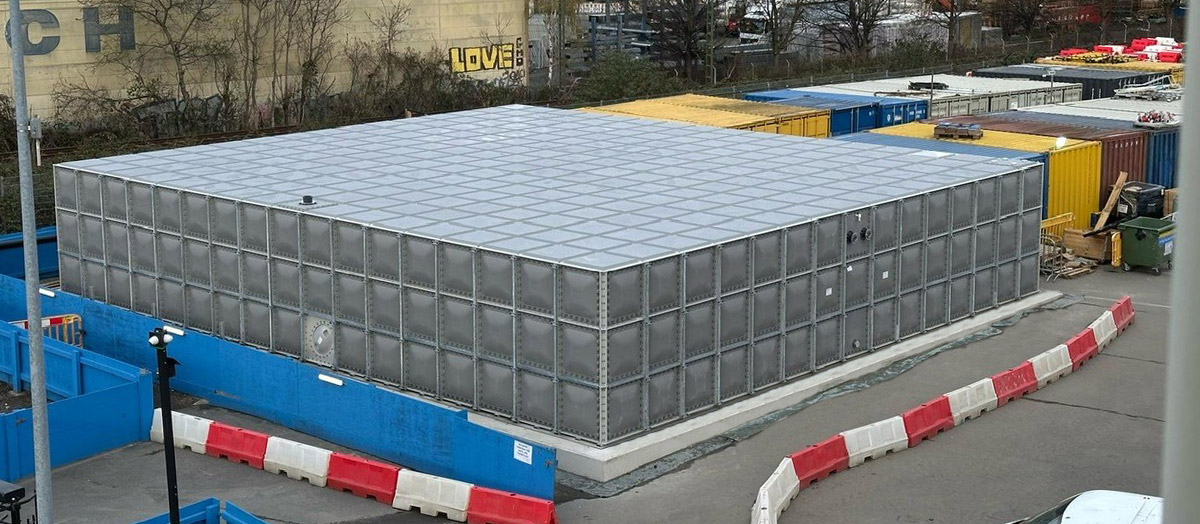
Commentary - September 2026
What data centres need to consider when storing produced water
By Jonathan Smith, Sales Director, Balmoral Tanks
Data centre water use is under growing scrutiny and the sector’s ability to add capacity at the pace required will depend partly on how well it manages demand without placing unnecessary pressure on potable supplies.
One source being considered is produced water from oil and gas operations – particularly in the next few years, with trial projects launched, and contracts in progress. In April 2026, the US Environmental Protection Agency launched its Water Reuse Action Plan 2.0, which includes accelerating water reuse for data centre cooling among its priorities.
The scale of the opportunity is considerable. According to forecasts from water intelligence provider B3 Insight, the Permian Basin was expected to produce around 22.3 million barrels of water each day on average during 2025, with approximately 16 million barrels a day going to disposal.
Where that water can be efficiently repurposed for data centre cooling, there is an opportunity to put an existing industrial stream to productive use while reducing demand on potable supplies. Making that work in practice requires infrastructure that can manage variable water quality, keep different streams separate and maintain a reliable supply, making storage is a critical part of the solution.

Jonathan Smith, Sales Director, Balmoral Tanks
Making produced water work
Produced water can vary considerably between sources. It may be brackish, highly saline, or it may contain minerals and other substances that need to be considered when the tank and sealant are specified.
The storage system therefore needs to be designed around the water that will actually arrive on site. Data centres can already require separate storage for brine, pre-treated water, treated industrial water, clarified water, filtered water, clean water and fire protection. Produced water would add another duty to a system that may already contain several different water streams, each requiring its own capacity and operating conditions.
Those differences should guide the material selection to protect against corrosion and extend the working life of the tank. Fusion-bonded epoxy can be well suited to produced water and other industrial water duties, combining corrosion resistance with a robust finish that stands up well during transport and installation. Glass-fused-to-steel may also be suitable in some cases, while galvanised and sectional glass-reinforced plastic (GRP) tanks have established roles elsewhere on the site.
Specify quality early
These decisions are easier to make when the tank manufacturer is involved early. Space needs to be considered alongside material selection because the available footprint can change the type of tank that works best - for example, a cylindrical tank may suit an external compound, while a sectional or shaped tank can be more practical in a basement.
Temperature also needs to be considered. As discussed earlier, produced water from the Permian Basin is one potential source for data centre cooling, and the Permian is a region where summer temperatures can become extremely high. That makes the tank’s location, exposure and material important. The design also needs to leave sufficient room for pipework and future access. Placing the required storage volume into whatever space remains is not the same as providing a tank installation that can be built and maintained properly.
These decisions need to be made before the package reaches tender - once a tank type and material have been written into the specification, there is often very little room to change them. We have seen that first-hand on data centre projects dating back to around 2010, covering clean water, fire protection, brine, effluent and treated industrial water, where the right questions are far easier to address before the design is fixed.
Build for the operating life
Data centres are expected to remain in service for decades, so their supporting water infrastructure should be considered over the same period rather than judged on purchase price alone. Industrial epoxy and glass-fused-to-steel tanks can be designed for operating lives of around 35 to 45 years, depending on the application and maintenance. Some lined or plastic systems may require more substantial work much earlier, which means that getting the specification wrong can leave the operator facing repair and disruption long before the data centre itself reaches the end of its life.
The better measure is therefore the lifetime cost of the system, including maintenance and the practicalities of taking a tank offline. The specification should also allow for changes in the produced water or future expansion of the site rather than being based only on opening-day conditions.
Carrying the specification through delivery
A good specification still has to survive procurement and construction, which can be challenging on projects where programmes are tight and responsibility passes through several organisations before the finished system reaches the operator.
Data centre operators place considerable emphasis on documentation, with detailed records expected to show that the materials and installation match what was approved. The level of scrutiny can be similar to that found in oil and gas, particularly where the infrastructure supports cooling or fire protection.
Manufacturers and installation partners therefore need the technical ability to supply the tank, together with the organisational and financial capacity to meet the programme and carry the original specification through to the finished installation.
Local manufacturing can reduce transport complexity, particularly in fast-growing markets such as the US, while experienced regional partners can support installation and help ensure that the system is delivered as designed.
A practical role for produced water
Produced water could become a useful addition to the data centre sector’s wider water strategy where the source and the facility are close enough for the model to work. The resource is available at scale and policy is moving towards greater reuse, but turning that opportunity into working infrastructure depends on decisions made early in the project.
The water needs to be understood and each storage duty clearly defined, with the tank selected around the conditions on site. Get those decisions right and produced water can become a practical cooling resource supported by storage infrastructure designed to serve the data centre for decades.
Get your water storage specification right
Talk to our team about storage solutions designed around your data centre, water quality and operating requirements
Talk to our team about storage solutions designed around your data centre, water quality and operating requirements